Peak Design Tech Pouch vs BAGSMART: Which Should You Buy?
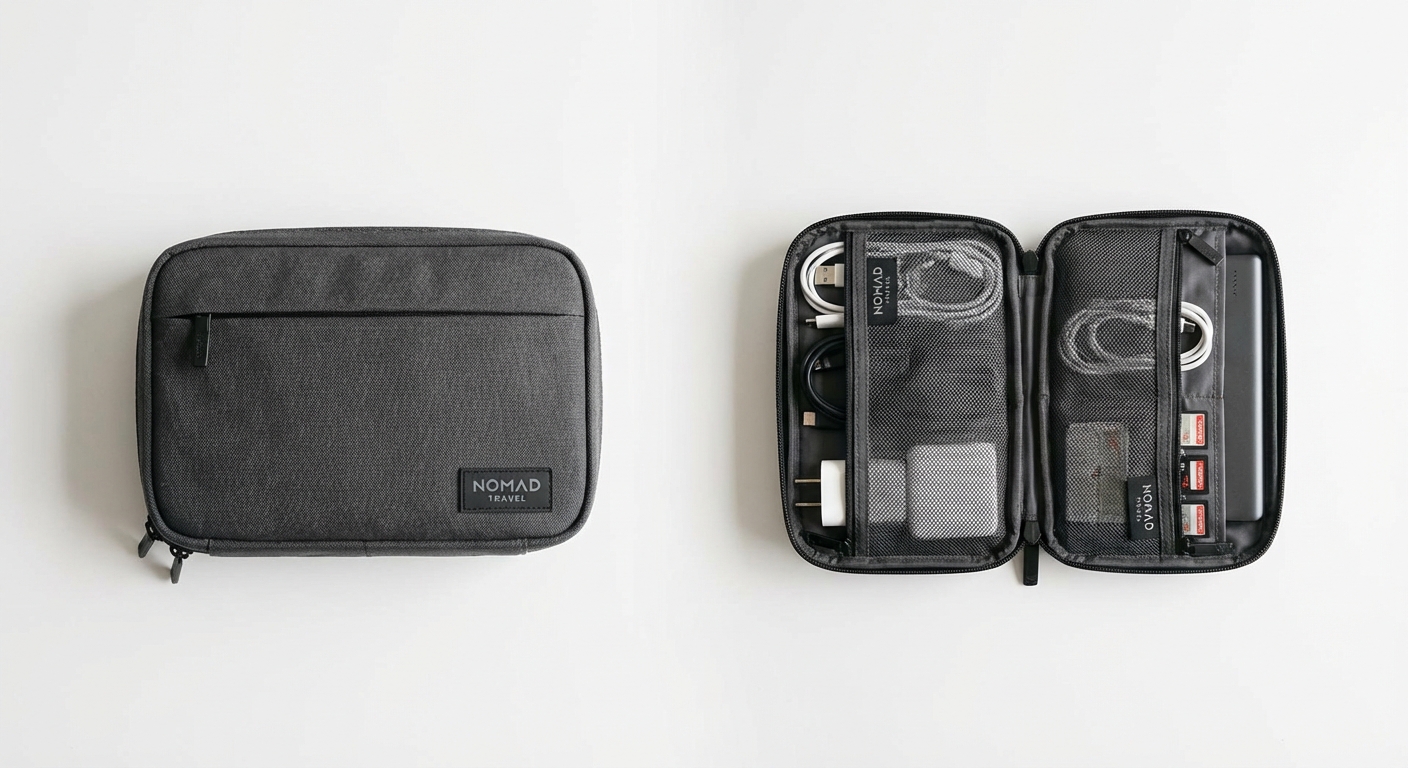

The Peak Design Tech Pouch costs $55. The BAGSMART Electronics Organizer costs $20. That's a $35 difference—nearly 3x the price.
Is the Peak Design actually 3x better? Or is the BAGSMART the smart choice for practical travelers?
After using both pouches extensively, here's the honest comparison. Spoiler: the answer depends entirely on how you'll use it.
Quick Navigation:
- Head-to-Head Specifications
- Organization and Access
- Build Quality and Durability
- Size and Portability
- Value Analysis
- The Verdict
Head-to-Head Specifications
| Feature | Peak Design Tech Pouch | BAGSMART Organizer |
|---|---|---|
| Price | $55 | $20 |
| Capacity | 2L | 1.5L |
| Weight | 7 oz | 6 oz |
| Dimensions | 9.8 x 5.5 x 3.9" | 9.4 x 7.3 x 0.8" (folded) |
| Material | 400D nylon weatherproof | Polyester, water-resistant |
| Opening style | Origami/accordion 180° | Clamshell/folder |
| Pockets/loops | 21 expandable | 15+ elastic/mesh |
| Warranty | Lifetime | 1 year |
Organization and Access
This is where the products differ most dramatically.
Peak Design: The Origami System
The Peak Design's signature feature is its origami-style organization:
How it works:
- Unzip and the pouch opens like an accordion
- Interior expands to show all contents simultaneously
- Elastic pockets in varying sizes hold items securely
- Everything visible without removing anything
Advantages:
- Find any item in seconds
- No digging through layers
- Items stay in place even when open
- Satisfying "everything at once" access
Disadvantages:
- Requires more width to open fully
- Takes slight learning curve to optimize layout
BAGSMART: The Double-Layer System
The BAGSMART uses a more traditional clamshell design:
How it works:
- Unzip to reveal two organizational layers
- One side has elastic loops for cables
- Other side has mesh/zippered pockets
- Folds flat when partially empty
Advantages:
- Intuitive, familiar layout
- Separate sections for different item types
- Compresses well when not full
- No learning curve
Disadvantages:
- Must flip through layers to find items
- Less visibility of all contents at once
- Items can shift between uses
Winner: Peak Design
The origami system genuinely changes how you interact with your tech. The ability to see everything at once eliminates the frustrating dig-and-search of traditional pouches. However, the BAGSMART's system works perfectly well—it's just not revolutionary.
Build Quality and Durability
Peak Design: Built to Last
Materials:
- 400D weatherproof nylon shell
- DWR coating sheds water
- Hypalon accents for durability
- YKK zippers
Build observations:
- Seams are clean and reinforced
- Zippers operate smoothly after years
- Shape retention remains excellent
- Shell resists scuffs and scratches
Expected lifespan: 5-10+ years of daily use (backed by lifetime warranty)
BAGSMART: Built to Budget
Materials:
- Polyester shell
- Water-resistant coating
- Generic zippers
- Plastic hardware
Build observations:
- Seams are adequate, not exceptional
- Zippers work fine but feel less premium
- Shape holds but with more flex
- Shell shows wear over time
Expected lifespan: 2-4 years of daily use
Winner: Peak Design
The quality difference is tangible. Pick up both pouches and the Peak Design feels like a premium product. The BAGSMART feels like a good budget product. Both work—one will last longer and feel better doing it.
Size and Portability
Peak Design Dimensions
- Closed: 9.8 x 5.5 x 3.9 inches
- Weight: 7 oz (empty)
- Form: Structured, maintains shape
The Peak Design has a consistent footprint regardless of contents. It's chunky but predictable.
BAGSMART Dimensions
- Closed (full): 9.4 x 7.3 x 2.5 inches
- Closed (empty): Can compress nearly flat
- Weight: 6 oz (empty)
- Form: Flexible, conforms to contents
The BAGSMART adapts—when half-full, it takes less space than when stuffed.
Winner: BAGSMART (slightly)
If pack space varies for you, the BAGSMART's flexibility is useful. The Peak Design takes consistent space whether you're carrying full gear or just a few cables. For one-bag travelers where every cubic inch matters, the BAGSMART's adaptability edges ahead.
What They Actually Hold
Peak Design Typical Load
The 2L capacity handles a full digital nomad tech kit:
- Laptop charger (GaN)
- Phone charger
- 2-3 cables (USB-C, Lightning)
- Power bank (medium)
- USB hub
- Earbuds (in case)
- SD cards
- Adapters
- AirTag/Tile
- Miscellaneous (dongles, pens)
Room for more if needed.
BAGSMART Typical Load
The 1.5L capacity handles essentials with some compromise:
- Laptop charger OR power bank (hard to fit both comfortably)
- Phone charger
- 2-3 cables
- Earbuds
- SD cards
- Adapters (1-2)
- Limited miscellaneous
Tight with a full kit.
Winner: Peak Design
Half a liter doesn't sound like much, but it's the difference between comfortable and cramped. If you carry substantial tech gear, the Peak Design's capacity matters.
Daily Use Experience
Peak Design: The Premium Experience
Setup time: Open, everything visible, grab what you need. 5-10 seconds.
Café workflow: Arrives organized, opens fully, items stay in place while you work, closes cleanly.
Airport security: Open for inspection, everything visible, repack quickly.
Long-term: After hundreds of uses, still satisfying to open. No degradation in functionality.
BAGSMART: The Functional Experience
Setup time: Unzip, flip through sections, find item. 10-20 seconds.
Café workflow: Arrives organized, need to partially unpack to access deeper items, repacking requires more attention.
Airport security: Open for inspection, may need to flip sections, repacking straightforward.
Long-term: Works fine, may show wear, organization remains adequate.
Winner: Peak Design
The daily experience difference is real but not dramatic. The Peak Design is genuinely more pleasant to use—the "opening ceremony" of an origami pouch is satisfying. The BAGSMART gets the job done without the premium experience.
Value Analysis
Cost Per Use
Let's assume 5 years of daily use (1,825 uses):
| Pouch | Price | Cost Per Use |
|---|---|---|
| Peak Design | $55 | $0.03 |
| BAGSMART | $20 | $0.01 |
Both are excellent value by cost-per-use metrics.
Total Cost of Ownership
If the BAGSMART lasts 3 years and Peak Design lasts 7+ years:
| Scenario | BAGSMART | Peak Design |
|---|---|---|
| 3 years | $20 | $55 |
| 6 years | $40 (2x purchase) | $55 |
| 9 years | $60 (3x purchase) | $55 |
The Peak Design potentially costs less over a decade of use.
The Value Verdict
BAGSMART wins if: You want to test tech pouches, budget is tight, or you expect your needs to change (and may want a different pouch style later).
Peak Design wins if: You'll use it daily for years, value the premium experience, or already know you want the best available.
Who Should Buy Peak Design
The Peak Design Tech Pouch makes sense if you:
- Use a tech pouch every single day
- Carry substantial gear (chargers, power bank, multiple cables)
- Value premium materials and build quality
- Appreciate thoughtful design details
- Want buy-it-for-life gear
- Can comfortably afford the premium
Best for: Established digital nomads who've confirmed tech pouches are essential to their workflow.
Who Should Buy BAGSMART
The BAGSMART Organizer makes sense if you:
- Are testing whether tech pouches improve your life
- Have a tighter budget
- Carry moderate gear loads
- Prefer to save money for other upgrades
- Don't need the absolute best
- Value function over experience
Best for: New nomads, budget-conscious travelers, or anyone unsure about the tech pouch category.
The Honest Truth
The Peak Design is better. Better built, better organized, better experience. That's not debatable.
The BAGSMART is fine. It works, it's organized, it's functional. That's also not debatable.
The question is whether "better" is worth $35 more to you.
The 80/20 Analysis
The BAGSMART delivers ~80% of the Peak Design's functionality at ~35% of the price. For many travelers, that's the right tradeoff.
The Peak Design delivers the remaining 20%—premium materials, innovative organization, daily satisfaction—for that $35 premium. For daily users, that 20% adds up over thousands of uses.
Other Options to Consider
This isn't a two-horse race. If neither feels right:
If you want premium but different: Bellroy Tech Kit ($59) - Minimalist aesthetic, excellent materials, smaller capacity
If you want even cheaper: Amazon Basics Electronics Organizer ($15) - Bare minimum functionality, surprisingly decent
If you want more capacity: tomtoc Electronics Organizer ($28) - Larger than both, good value
For the complete tech pouch roundup, see our best tech pouches guide.
The Verdict
Buy the BAGSMART first.
Here's why: At $20, the BAGSMART lets you test whether a dedicated tech pouch actually improves your life. Some people love them; some never use them consistently.
If after 6 months of daily BAGSMART use you find yourself:
- Using it every single day
- Wishing it were better organized
- Frustrated with the build quality
Then upgrade to Peak Design with confidence. You've validated the category and know the premium is worth it.
If you find yourself:
- Using it occasionally
- Satisfied with the functionality
- Not thinking about it much
Keep the BAGSMART. You've saved $35 for something you'd have spent on "the best" without needing it.
Exception: If you already know you're a gear optimizer who appreciates premium quality in daily-use items, skip the trial—buy the Peak Design directly. You'll end up there anyway, and the BAGSMART becomes redundant.
Related guides:
- Best Tech Pouches and Cable Organizers
- The Ultimate Digital Nomad Packing List
- How to Organize Your Digital Nomad Backpack
Peak Design Tech Pouch - The Premium Choice

Peak Design Tech Pouch
The Premium Choice
The Peak Design Tech Pouch has become the benchmark for premium cable organization.
The Peak Design Tech Pouch has become the benchmark for premium cable organization. The origami-style interior creates an accordion of elastic pockets that opens to 180°—every item visible at once without digging. Weatherproof 400D nylon shell handles spills and rain. The structured design maintains shape whether full or nearly empty. At 2L capacity, it fits substantial gear while staying compact. This is the pouch that converts skeptics into believers.
What We Like
❝After three years of daily use across 30+ countries, this pouch still looks nearly new. Everything has a place, and I can find what I need in seconds.❞
BAGSMART Electronics Organizer - The Value Champion

BAGSMART Electronics Organizer
The Value Champion
The BAGSMART Electronics Organizer delivers 80% of premium pouches at 35% of the price.
The BAGSMART Electronics Organizer delivers 80% of premium pouches at 35% of the price. Multiple elastic loops and zippered mesh pockets keep cables separated. The double-layer design fits a surprising amount without bulging. Water-resistant exterior handles the occasional splash. At under $20, it's the rational choice for most travelers. Quality exceeds what the price suggests—these aren't cheap, they're value-engineered.
What We Like
❝Bought this expecting it to fall apart. Two years later, still using it daily. Can't beat this value.❞
Review of What We Liked
The Premium Choice
The Peak Design Tech Pouch has become the benchmark for premium cable organization.
The Value Champion
The BAGSMART Electronics Organizer delivers 80% of premium pouches at 35% of the price.
About the Author