Budget Accommodation Strategies: Affordable Housing for Digital Nomads
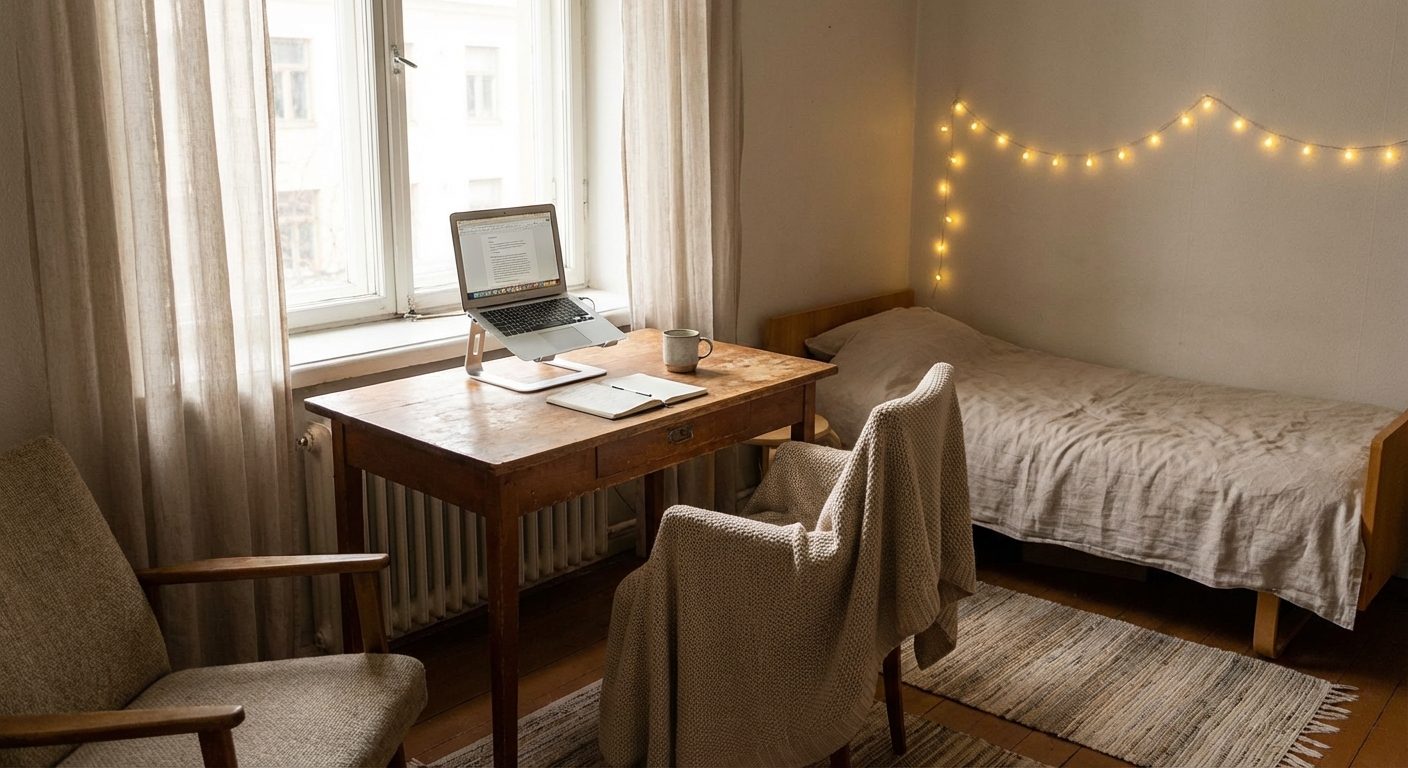

Nomad life doesn't require high income. Budget-conscious nomads thrive by combining free accommodation options (house sitting, work exchange), strategic timing, and regional arbitrage. This guide covers every budget strategy from completely free options to optimizing paid accommodation costs.
This article is part of our Complete Digital Nomad Accommodation Guide.
Budget Accommodation Quick Facts
Free Accommodation Options
House Sitting
House sitting provides free accommodation in exchange for caring for someone's home (and usually pets) while they travel. It's not passive—you're providing a service—but it eliminates accommodation costs entirely. TrustedHousesitters is the industry leader with the most listings, though several budget alternatives exist.
Major platforms:
| Platform | Membership Cost | Focus | Listings |
|---|---|---|---|
| TrustedHousesitters | $149/year | Global, premium | 5,000+ active |
| MindMyHouse | $20/year | Budget option | 2,000+ |
| Nomador | $89/year | Europe focus | 3,000+ |
| HouseSittersAmerica | $50/year | US/Canada | 1,000+ |
How it works:
- Create profile with references, experience, background check
- Browse available sits by location and date
- Apply to listings with personalized message
- Video call with homeowner for mutual vetting
- If selected, agree on dates and expectations
- Care for home/pets during owner's absence
What's expected:
- Pet care (feeding, walks, medication, companionship)
- Home security (presence, mail collection, basic maintenance)
- Plant watering, pool maintenance (varies)
- Light cleaning (leaving home as you found it)
Realistic expectations:
- Competition is high for desirable sits (cities, good timing)
- References matter — start with easier sits to build reputation
- Pet experience helps — especially for dogs, cats with medical needs
- Flexibility wins — rigid dates limit opportunities
- Rural/suburban sits are easier to secure than major cities
Best for: Nomads with flexible schedules, pet lovers, those comfortable in residential neighborhoods rather than city centers.
House Sitting Strategy
Start with less competitive sits (rural, long duration, multiple pets) to build references. After 3-5 positive reviews, you become competitive for desirable city sits.
Work Exchange
Work exchange programs provide accommodation (and often meals) in exchange for part-time work. Unlike house sitting, you're actively working 15-30 hours per week. Workaway is the most popular platform with the widest variety of opportunities, while Worldpackers specializes in hostel placements.
Major platforms:
| Platform | Membership Cost | Focus | Hours/Week |
|---|---|---|---|
| Workaway | $59/year | Global, diverse | 20-25 |
| WWOOF | $20-60/year | Organic farms | 20-30 |
| HelpX | $35/year | Farms, B&Bs | 15-25 |
| Worldpackers | $49/year | Hostels focus | 15-25 |
Work types:
- Hostel front desk/cleaning — social, skill-building
- Farm work — physical, outdoor, often rural
- Teaching English — some programs include accommodation
- Childcare/au pair — more commitment, often better accommodation
- Construction/renovation — physical, learn skills
- Marketing/social media — if you have skills
What's provided:
- Private room or shared dorm
- Meals (most programs)
- Sometimes: wifi, community, skills training
What's expected:
- 15-30 hours/week of agreed work
- Minimum stay (usually 2-4 weeks)
- Positive attitude and reliability
Realistic expectations:
- Work quality varies — some hosts are excellent, some exploitative
- Read reviews carefully — platform reviews reveal problem hosts
- Balance with remote work — 25 hours/week leaves limited time for paid work
- Legal gray area — technically could require work permits in some countries
Best for: Nomads with flexible remote work schedules, skill-builders, those wanting immersive cultural experiences, budget travelers who don't mind physical work.
Couchsurfing
Couchsurfing connects travelers with hosts offering free accommodation. Less structured than house sitting or work exchange—hospitality is freely offered without formal exchange.
Current state (2026):
- Platform now requires paid membership ($2.39/month or $14.29/year)
- Verification costs extra ($60/year)
- Community smaller than peak years but still active
- Works best for short stays (1-5 nights), rarely suitable for long-term
Alternatives:
- BeWelcome — Free, non-profit alternative
- Trustroots — Focused on hitchhikers, outdoor travelers
- Warm Showers — Cyclists specifically
Best for: Short stays, social travelers, budget-conscious explorers. Not practical as primary accommodation strategy.
Low-Cost Paid Options
Hostels for Digital Work
Modern hostels have evolved to accommodate remote workers with wifi, desks, and quiet zones.
Hostel work amenities to look for:
- Dedicated coworking space (not just lobby)
- Fast wifi with speed advertised
- Quiet hours during work times
- Power outlets at beds/desks
- Private room options
Cost comparison:
| Option | Monthly Cost | Pros | Cons |
|---|---|---|---|
| Dorm bed | $300-600 | Cheapest, social | No privacy, noise |
| Private room | $500-1,000 | Privacy, still social | More expensive |
| Hostel + coworking | $400-800 | Dedicated workspace | Split setup |
Best hostel chains for workers:
- Generator (Europe) — Modern, wifi good, some coworking
- Freehand (US) — Upscale hostel, workspace areas
- Selina (Global) — Hostel-hotel hybrid with coworking
- The Hive (Asia) — Work-focused hostels
Shared Apartments
Flat-sharing reduces costs by 30-50% compared to solo apartments while providing some social connection.
Finding shares:
- WG-Gesucht (Germany)
- SpareRoom (UK)
- Roomster (Global)
- Facebook Groups — "[City] Flatshare/Roommate"
What to clarify:
- Lease situation (are you on lease or informal subletter?)
- Shared space policies (guest rules, quiet hours, cleaning)
- Workspace availability (can you work from common areas?)
- Wifi quality and stability
Best for: Solo travelers who want social contact, budget-conscious long-stayers, those comfortable sharing space with strangers.
Timing Strategies
Seasonal Pricing
Accommodation prices swing 20-50% based on season. Strategic timing dramatically reduces costs.
| Destination | Peak Season | Off-Season | Savings |
|---|---|---|---|
| Thailand | Nov-Feb | May-Oct | 25-40% |
| Portugal/Spain | Jun-Sep | Oct-May | 20-35% |
| Mexico | Dec-Mar | Apr-Nov | 20-30% |
| Bali | Jul-Aug, Dec | Feb-Jun | 30-40% |
| Eastern Europe | Jun-Aug | Sep-May | 15-25% |
Off-season trade-offs:
- Weather may be less ideal (but often still fine)
- Some businesses/services may close
- Fewer other nomads (good or bad)
- Local prices lower across all spending
Last-Minute vs Advance Booking
| Timing | When It Works | When It Fails |
|---|---|---|
| Last-minute (< 1 week) | Off-season, less popular areas | Peak season, popular destinations |
| 2-4 weeks ahead | Balanced approach, most situations | Very competitive markets |
| 6+ weeks ahead | Peak season, specific properties | May miss better deals |
Last-minute strategy:
- Works well on Booking.com (good last-minute inventory)
- Check Airbnb "Last Minute Deals" filter
- Be flexible on exact property/neighborhood
- Works best in off-season
Regional Price Comparison
Choosing the right region is the biggest budget lever. Same quality of life costs 3-5x more in expensive versus cheap regions.
Global Cost Comparison
| Region | Monthly Accommodation | Quality Level |
|---|---|---|
| SE Asia (Thailand, Vietnam, Indonesia) | $300-800 | Good apartment |
| Eastern Europe (Georgia, Bulgaria, Romania) | $400-900 | Good apartment |
| Latin America (Mexico, Colombia, Argentina) | $400-1,000 | Good apartment |
| Southern Europe (Portugal, Spain, Greece) | $800-1,500 | Good apartment |
| Western Europe (Germany, France, Netherlands) | $1,200-2,500 | Good apartment |
| US/Canada | $1,500-3,500 | Good apartment |
| Australia/NZ | $1,400-2,500 | Good apartment |
Best Value Destinations
| Destination | Monthly Cost | Why It's Good Value |
|---|---|---|
| Tbilisi, Georgia | $400-700 | Fast wifi, walkable, cafe culture |
| Chiang Mai, Thailand | $350-600 | Established nomad infrastructure |
| Medellín, Colombia | $500-900 | Modern city, pleasant climate |
| Bansko, Bulgaria | $400-700 | Cheap Europe, ski resort amenities |
| Ho Chi Minh City, Vietnam | $400-700 | Dynamic city, good food |
| Mexico City | $600-1,000 | Culture, food, connectivity |
| Lisbon, Portugal | $900-1,400 | Higher cost but excellent lifestyle |
For destination details, see our guides to Tbilisi, Chiang Mai, Medellín, and Bali.
Hidden Costs to Budget For
Advertised rent rarely equals total cost. Budget for these additions.
Common Additional Costs
| Cost | Typical Amount | Notes |
|---|---|---|
| Electricity | $30-150/month | High in hot climates (AC) or cold (heating) |
| Internet upgrade | $20-50/month | If included wifi is too slow |
| Cleaning | $50-150/month | If not included |
| Utilities (water, gas) | $20-50/month | Often included but verify |
| Laundry | $20-40/month | If not in-unit |
| Platform fees | 10-20% | Airbnb service fees |
| Currency exchange | 1-3% | International card fees |
AC/Heating Surprise
Hot climates: Air conditioning can add $50-150/month to electricity. Ask landlords about typical electric bills before committing.
Cold climates: Heating costs vary dramatically by system (gas vs electric, building insulation). Winter months in Eastern Europe or Northern Asia can double utility costs.
The "All-In" Calculation
When comparing options, calculate true monthly cost:
True Cost = Rent + Utilities + Cleaning + Platform Fees + Hidden Costs
A $600/month Airbnb might actually cost $750 when including fees and utilities. A $450/month local rental with $100 utilities costs $550 total—but requires more setup.
Combining Strategies
The most effective budget approach combines multiple strategies:
The Budget Nomad Annual Plan
Example: $800/month average accommodation budget
| Months | Strategy | Monthly Cost |
|---|---|---|
| Jan-Feb | House sitting (Australia) | $0 (membership only) |
| Mar-May | Direct rental, Chiang Mai | $450 |
| Jun-Jul | Work exchange (Portugal hostel) | $0 + work hours |
| Aug-Sep | Local rental, Tbilisi | $500 |
| Oct-Nov | Airbnb monthly, Mexico City off-season | $700 |
| Dec | Return home / housesit | $0 |
Total year: ~$3,100 (average $258/month)
This requires flexibility, planning, and comfort with varied living situations—but demonstrates what's possible.
Minimum Viable Budget by Region
| Region | Minimum Budget | What It Gets |
|---|---|---|
| SE Asia | $250-400 | Basic studio, wifi |
| E. Europe | $350-500 | Basic apartment, wifi |
| Latin America | $400-600 | Basic apartment, wifi |
| S. Europe | $600-900 | Shared apartment or basic studio |
| W. Europe | $900-1,200 | Shared apartment |
| US major city | $1,000-1,500 | Room in shared apartment |
These are true minimums—functional but not comfortable for long-term.
Budget Accommodation Red Flags
Cheap sometimes means problems. Watch for these warning signs:
Safety Concerns
- Neighborhood feels unsafe at night
- No secure building entry
- Poor lighting in common areas
- Landlord reluctant to show building/area
Livability Issues
- No natural light
- Mold or dampness
- Noise from neighbors/street
- No ventilation in hot climates
- Unreliable hot water
Work Suitability
- Wifi speed not adequate
- No desk or workspace
- Constant construction noise
- Building blocks cell signal
The floor: There's a price below which accommodation becomes counterproductive. If your living situation prevents you from working effectively or staying healthy, savings become costly.
Conclusion
Budget accommodation isn't about suffering—it's about strategic resource allocation. House sitting eliminates housing costs while providing excellent living situations. Work exchange trades time for accommodation plus experiences. Regional arbitrage lets you live well in affordable places rather than poorly in expensive ones.
The budget nomad mindset: Accommodation is your largest expense, so optimizing it creates the most leverage. Combine strategies, stay flexible, and choose destinations where your budget delivers quality of life rather than just survival.
For the complete accommodation strategy, see our Digital Nomad Accommodation Guide.
About the Author