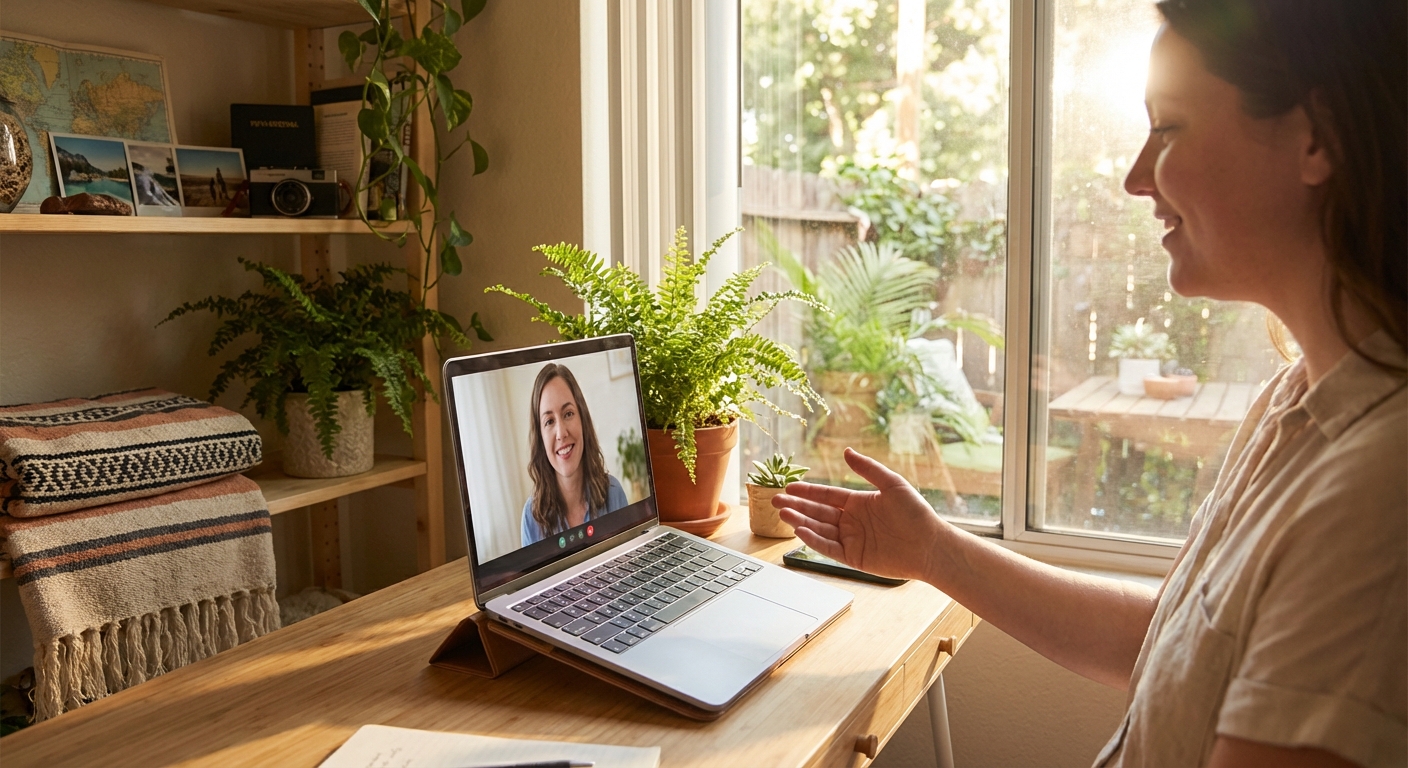
Getting professional mental health support while traveling the world isn't impossible—it just requires knowing your options and planning ahead. The resources exist. The challenge is accessing them across time zones, healthcare systems, and language barriers.
This guide covers exactly how to find and access mental health support as a digital nomad: from online therapy platforms to in-person care abroad, psychiatric medication management, crisis resources by region, and creating your personal mental health emergency plan.
This is part of our complete digital nomad mental health guide.
Getting Help When Help Isn't Around the Corner
Mental Health Support for Nomads
Why Getting Help Matters
Getting professional support isn't weakness—it's practical problem-solving. Just as you'd see a doctor for a physical ailment, seeing a mental health professional for psychological challenges is simply accessing the right expertise.
The unique challenges of nomad life—isolation, uncertainty, relationship strain, identity questions—benefit enormously from professional guidance. A skilled therapist can help you:
- Identify patterns you can't see yourself
- Develop coping strategies specific to nomad challenges
- Process the accumulated losses of constant movement
- Navigate career, relationship, and lifestyle decisions
- Manage anxiety, depression, or other conditions
- Build resilience for long-term sustainability
When to Seek Professional Help
Consider professional support if:
| Situation | Why Professional Help |
|---|---|
| Symptoms lasting 2+ weeks | Persistence suggests more than temporary difficulty |
| Work or relationships suffering | Functional impairment needs intervention |
| Self-help isn't working | Some issues require professional tools |
| Thoughts of self-harm | Immediate professional support needed |
| Substance use to cope | Professional guidance prevents escalation |
| Major life decisions | Objective support during transitions |
| Past trauma resurfacing | Specialized treatment is effective |
You don't need to be in crisis to benefit from therapy. Many nomads use therapy proactively for personal development, decision support, and maintaining mental fitness.
Online Therapy Platforms
Online therapy has transformed mental health access for nomads. You can maintain a consistent therapeutic relationship regardless of location, time zone, or local healthcare quality.
Major Platforms Compared
| Platform | Cost | Format | Best For |
|---|---|---|---|
| BetterHelp | $70-100/week | Unlimited messaging + weekly session | General therapy, convenience |
| Talkspace | $69-109/week | Messaging + video sessions | Text-based preference |
| Cerebral | $60-365/month | Medication management + optional therapy | Medication management |
| Headway | Varies (insurance) | Licensed therapists | US insurance users |
| Calmerry | $50-70/week | Messaging + sessions | Budget-conscious |
| Online-Therapy.com | $40-88/week | CBT-focused tools + therapist | Structured CBT approach |
How to Choose a Platform
Consider your needs:
- Medication needed? Choose platforms with psychiatric services (Cerebral, Done, Brightside)
- Insurance coverage? Check Headway, Alma, or therapist who accepts your insurance
- Tight budget? Calmerry, Open Path Collective (sliding scale), or 7 Cups (free peer support)
- Specific modality? Some platforms specialize (CBT, psychodynamic, etc.)
- Time zone flexibility? Messaging-based therapy accommodates any schedule
Tips for Online Therapy Success
Making Online Therapy Work
- Schedule consistently: Same time each week, adjusted for your current time zone
- Create private space: Headphones, do-not-disturb, private location
- Test technology: Reliable internet, backup plan (phone call) if video fails
- Be honest about lifestyle: Therapist needs to understand nomad context
- Use messaging between sessions: Most platforms include async support
- Give it time: 4-6 sessions minimum to evaluate fit
Pros and Cons of Online Therapy
Pros
- Works from any location with internet
- Maintain same therapist across moves
- Flexible scheduling across time zones
- Often more affordable than in-person
- No commute or waiting room
- Messaging support between sessions
Cons
- Less personal than in-person for some
- Requires reliable internet connection
- May not accept international clients (some platforms)
- Time zone scheduling can be challenging
- Not suitable for severe crisis situations
- Insurance coverage varies
Finding Individual Telehealth Therapists
Beyond platforms, you can work with individual licensed therapists who offer video sessions. This often provides better continuity and personalization than platform-assigned therapists.
Where to Find Therapists
| Resource | Description |
|---|---|
| Psychology Today | Largest therapist directory, filter by "online therapy" |
| Good Therapy | International directory with telehealth filter |
| Therapy Den | Focus on social justice, marginalized communities |
| Asian Mental Health Collective | Asian-identifying therapists |
| Latinx Therapy | Latinx therapists, Spanish-speaking |
| Open Path Collective | Sliding scale ($40-80/session + $65 lifetime fee) |
| Your Insurance Provider | In-network telehealth options |
Questions to Ask Potential Therapists
Before committing, ask:
- "Do you work with clients abroad?" — Some are uncomfortable with international practice
- "How do you handle time zone changes?" — Flexibility is essential
- "What's your experience with digital nomads/expats?" — Context understanding matters
- "What happens if I'm in crisis in a foreign country?" — Know their limitations
- "How do payments work internationally?" — Some only accept certain payment methods
- "What's your cancellation policy?" — Important when travel changes happen
- "Are sessions recorded or documented?" — Privacy considerations
Licensing Considerations
Therapist licensing is jurisdiction-specific. A therapist licensed in California technically shouldn't treat someone in Thailand. In practice:
- Many therapists work with international clients regardless
- Some states/countries have interstate/international compacts
- Risk is low for client; higher for therapist
- Focus on finding good fit rather than perfect legality
- Document that you're establishing care from their licensed jurisdiction
In-Person Mental Health Care Abroad
Sometimes you need face-to-face support—crisis situations, medication needs, or personal preference. Here's how to find it.
Finding Local Mental Health Providers
| Method | Best For |
|---|---|
| Expat forums/Facebook groups | Peer-vetted recommendations |
| International clinics | English-speaking, Western-trained |
| Embassy lists | Your country's embassy often maintains provider lists |
| Insurance provider network | If you have international coverage |
| Hospital psychiatry departments | For medication or serious concerns |
| Google Maps + reviews | "Psychiatrist" or "psychologist" + city |
Country-Specific Considerations
High-quality, affordable care:
- Thailand: Excellent private hospitals (Bumrungrad, Bangkok Hospital), affordable psychiatry
- Mexico: Growing mental health infrastructure, Spanish often required
- Portugal: Public and private options, good English in Lisbon
- Malaysia: Quality private care, English-speaking
More challenging access:
- Developing countries: Limited English-speaking providers
- Rural areas: May need to travel to cities
- Countries with mental health stigma: Providers exist but are less visible
Language Barriers
Options when local providers don't speak your language:
- International/expat clinics (pricier but English-speaking)
- Translators (some clinics provide, or bring your own)
- Online therapy with home-country provider (often better option)
- Written communication with translation apps (limited but functional)
Psychiatric Care and Medication
Managing psychiatric medication while nomadic requires extra planning but is entirely possible.
Traveling With Psychiatric Medication
Medication Travel Rules
Always carry psychiatric medication in original pharmacy containers with your name on the prescription label. Carry a doctor's letter explaining the medication, dosage, and medical necessity. Research destination country rules—some medications legal at home are controlled or banned elsewhere.
Essential steps:
- Carry documentation: Original containers + doctor's letter
- Research destination laws: Some countries restrict certain medications
- Keep in carry-on: Never check psychiatric medication
- Bring adequate supply: 90-day supply where possible
- Have backup plan: Know where to get emergency refill
Controlled Substances by Region
| Medication Type | Generally OK | Requires Caution | Often Problematic |
|---|---|---|---|
| SSRIs/SNRIs | Most countries | UAE, Japan (declare) | Few restrictions |
| Benzodiazepines | Most with documentation | Middle East, Asia | Japan, UAE (some banned) |
| Stimulants (Adderall) | USA, UK, Australia | Many countries | Japan, UAE, Russia (banned) |
| Sleep medications | Most countries | Middle East | Varies by specific drug |
Always research your specific medication + destination before travel.
Getting Prescriptions Abroad
Options for continuing or obtaining psychiatric medication:
| Option | How It Works |
|---|---|
| Home psychiatrist telehealth | Prescribe to home pharmacy, someone mails to you |
| International pharmacy networks | Some accept international prescriptions |
| Local psychiatrist abroad | New evaluation, local prescription |
| International clinics | Western-trained, can prescribe locally |
| Travel to home country | Some nomads schedule periodic returns |
Medication Continuity Tips
- Start with long supply: 3-6 months if your doctor will prescribe
- Establish telehealth psychiatry: Maintain home-country provider relationship
- Research before running low: Don't wait until last week to figure it out
- Generic names: Know the international generic name, not just brand
- Gradual changes: Don't abruptly stop medication due to access issues
Insurance and Mental Health Coverage
Mental health coverage for nomads ranges from excellent to nonexistent depending on your insurance type.
Insurance Types and Mental Health Coverage
| Insurance Type | Mental Health Coverage | Notes |
|---|---|---|
| SafetyWing Essential | Excluded | Basic plan, mental health not covered |
| SafetyWing Complete | 10 visits/year | Full plan includes mental health coverage |
| World Nomads | Limited | Primarily travel emergencies |
| IMG Global | Better coverage | Varies by plan |
| Cigna Global | Comprehensive | Premium pricing |
| Allianz Worldwide | Good coverage | International plans |
| Home country insurance | Varies | Check telehealth/international provisions |
For detailed insurance comparisons, see our travel insurance guide and SafetyWing review.
Questions for Your Insurance Provider
- Does the policy cover mental health treatment?
- Are online/telehealth sessions covered?
- Is there coverage while abroad?
- What mental health providers are in-network?
- Are psychiatric medications covered?
- Is there a mental health deductible or copay?
- Are pre-existing mental health conditions excluded?
When Insurance Doesn't Cover Mental Health
Options for uninsured mental health care:
- Sliding scale therapists: Many offer reduced rates based on income
- Open Path Collective: $40-80 sessions with licensed therapists (plus $65 lifetime membership)
- Training clinics: University psychology programs offer supervised low-cost therapy
- Community health centers: Where available
- Peer support: 7 Cups (free), support groups, community
- Self-help resources: Evidence-based books, apps, programs
Crisis Resources by Region
When you're in crisis, you need help immediately. Save these resources before you need them.
International Crisis Lines
| Resource | Contact | Notes |
|---|---|---|
| International Association for Suicide Prevention | https://www.iasp.info/resources/Crisis_Centres/ | Directory by country |
| Crisis Text Line | Text HOME to 741741 (US) | Text-based support |
| Befrienders Worldwide | https://www.befrienders.org | International helpline directory |
| SAMHSA (US) | 1-800-662-4357 | Substance abuse and mental health |
Regional Crisis Numbers
North America:
- USA: 988 (Suicide & Crisis Lifeline)
- Canada: 1-833-456-4566 (Talk Suicide Canada)
- Mexico: 800-290-0024
Europe:
- UK: 116 123 (Samaritans)
- Germany: 0800 111 0 111
- France: 3114
- Spain: 024
- Portugal: 808 200 204
- Netherlands: 113 (0900 0113)
Asia-Pacific:
- Australia: 13 11 14 (Lifeline)
- Japan: 0120-783-556
- Thailand: 1323
- Philippines: 0917 899 8727
- Singapore: 1800 221 4444
Latin America:
- Brazil: 188 (CVV)
- Argentina: (011) 5275-1135
- Colombia: 106
In Immediate Crisis
If you're in immediate danger of harming yourself or others, call local emergency services (911, 112, 999, depending on country) or go to the nearest emergency room. These services are available to everyone regardless of immigration status or insurance.
What to Expect When Calling Crisis Lines
- You don't need to give your name
- Trained counselors will listen without judgment
- They won't automatically call police unless you're in immediate danger
- You can hang up if you're uncomfortable
- Calling doesn't commit you to anything
- Many lines have chat/text options if phone feels hard
Support Groups and Peer Support
Professional help isn't the only support. Peer communities provide understanding that therapists sometimes can't.
Online Support Communities
| Community | Description |
|---|---|
| 7 Cups | Free trained listeners + community support |
| Reddit r/digitalnomad | Occasional mental health discussions |
| Reddit r/depression, r/anxiety | Active peer support communities |
| Nomad List forum | Mental health threads in the community |
| Facebook groups | "[City] Digital Nomads" often discuss wellbeing |
Specialized Support Groups
- SMART Recovery: Substance issues, online meetings worldwide
- AA/NA International: Meetings in most major cities and online
- DBSA (Depression and Bipolar Support Alliance): Peer-led groups
- NAMI (National Alliance on Mental Illness): US-based with online resources
- Anxiety and Depression Association: Online support community
Creating Your Support Network
Build a personal support network before you need it:
- Identify 2-3 people you can call at 3 AM (across time zones)
- Find online communities that resonate
- Connect with local nomad communities at each destination
- Maintain regular check-ins with people who know you well
- Know the local emergency resources at each location
Creating Your Mental Health Emergency Plan
Don't wait for crisis to figure out your response. Create a plan now.
Your Emergency Plan Template
Section 1: Warning Signs List your personal early warning signs (poor sleep, isolation, negative thoughts, etc.):
- Warning sign 1: ________________
- Warning sign 2: ________________
- Warning sign 3: ________________
Section 2: Coping Strategies List what helps when you're struggling:
- Activity that helps: ________________
- Person to contact: ________________
- Place that feels safe: ________________
- Routine that grounds you: ________________
Section 3: People to Contact
- Therapist: ________________ (phone/email)
- Emergency contact (home): ________________
- Local friend (current location): ________________
- Crisis line for current country: ________________
Section 4: Professional Resources
- Insurance information: ________________
- Nearest hospital: ________________
- Psychiatrist/medication provider: ________________
- Telehealth platform login: ________________
Section 5: Emergency Protocols
- If I'm in crisis, I will: ________________
- Someone who can help remotely: ________________
- Emergency fund access: ________________
- How to get home if needed: ________________
Keep This Accessible
- Save as note on phone
- Email yourself a copy
- Share with emergency contact
- Update when you move to a new location
- Review monthly
Taking Action Now
If you're reading this guide, you're already taking your mental health seriously. That's the most important step.
Immediate Next Steps
If you're in crisis now:
- Call a crisis line from the list above
- Tell someone where you are
- Go to a safe public place if needed
- Don't make major decisions
If you're struggling but stable:
- Schedule one therapy session (just one)
- Tell one person how you're really doing
- Identify one small self-care action for today
- Bookmark crisis resources for your region
If you're doing okay but want to prepare:
- Research therapists and save 2-3 options
- Complete your emergency plan template
- Check your insurance mental health coverage
- Build your support network intentionally