Starlink Mini Review: Backpack Satellite Internet for Remote Work
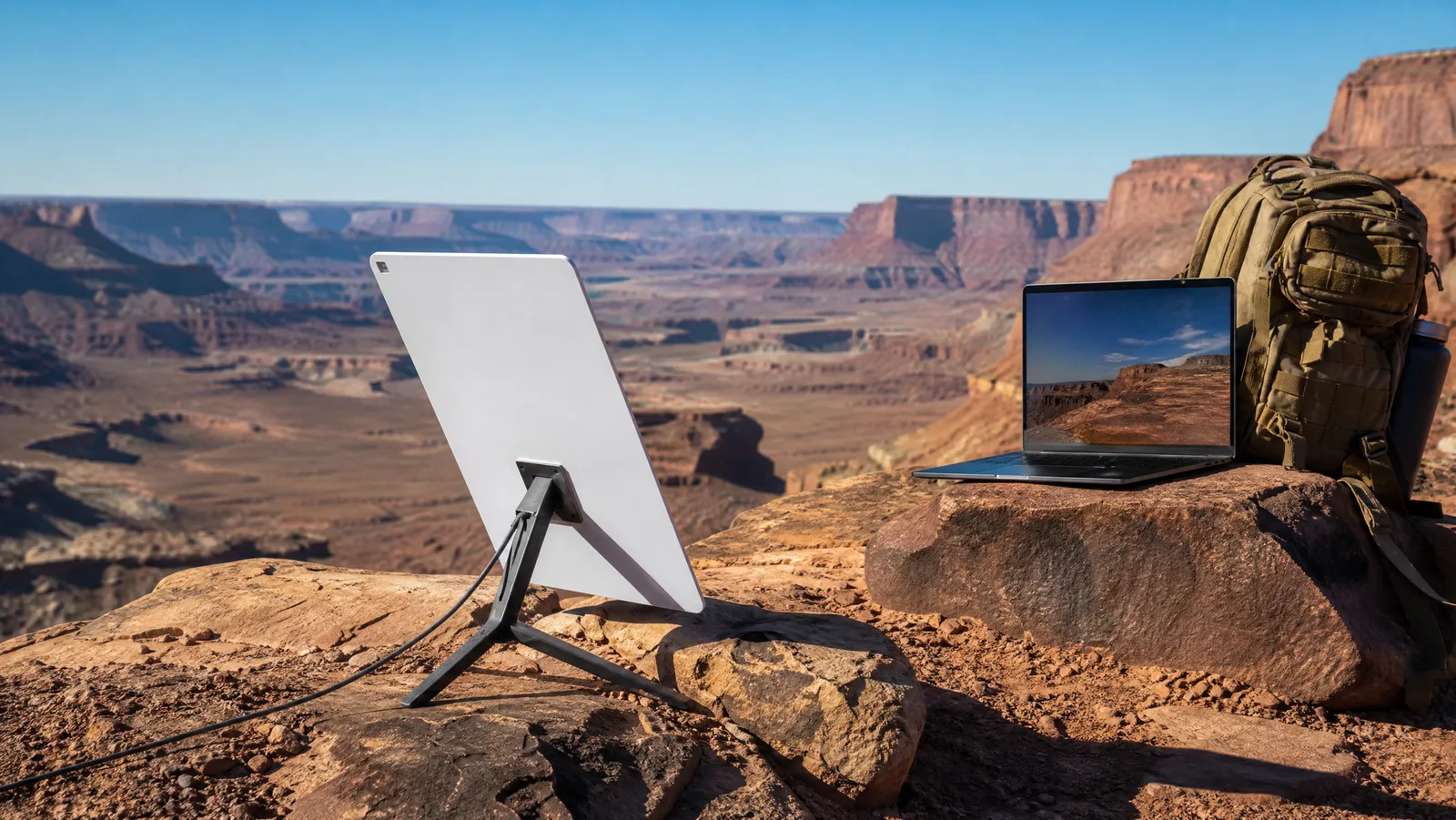

Is the Starlink Mini good for remote work? Yes — with two conditions. Give this 2.4-pound dish a clear view of the sky and a power source of roughly 100W, and you get video-call-grade internet in places no cell tower reaches: reviewers consistently measure around 100 Mbps down with latency typically in the 30-40 ms range. This article contains affiliate links — as an Amazon Associate, we earn from qualifying purchases at no extra cost to you.
This starlink mini review covers what the dish actually delivers for remote workers: real-world speeds, video-call quality, battery options, plan pricing, and the honest failure modes nobody puts in the marketing copy. It is one piece of our complete guide to off-grid remote work — start there if you are still deciding between satellite, cellular, and hybrid setups.
Starlink Mini Review: The 60-Second Verdict
Buy the Starlink Mini if you work from campsites, remote coastlines, mountain villages, or a van, and losing a video call means losing income. It is the first satellite dish that genuinely fits in a daypack and runs from a beefy power bank.
Skip it if you spend most of your time in cities with solid 4G/5G. A hotspot or eSIM is cheaper, lighter, and sips power — more on that below.
Quick numbers, per our research:
| Spec | Starlink Mini |
|---|---|
| Weight | 2.43 lb (1.1 kg) without kickstand |
| Footprint | 11.75 x 10.2 x 1.45 in |
| Typical download | 60-170 Mbps in long-term testing |
| Typical latency | 25-60 ms |
| Average power draw | 25-40W |
| Hardware price | 249 dollars on Amazon as of July 2026 |
The Specs That Matter for Remote Work
The headline feature is integration: the Mini packs the antenna and a dual-band AC Wi-Fi router into one flat slab. There is no separate router box, no cable spaghetti — one unit, one power cable, done.
According to Starlink's official spec sheet, the Mini measures 298.5 x 259 x 38.5 mm and weighs 1.1 kg (2.43 lb) without the kickstand — about the size of a thick laptop. That is the entire point of this product. Every other Starlink dish needs a vehicle or a fixed base; this one slides into a backpack laptop sleeve.
Power is the second story. Starlink's spec sheet lists average power consumption of 25-40W, Anker SOLIX's power consumption guide puts idle draw around 15W, and 4WDTalk's field data records a brief startup surge near 60W. Compare that to zero-infrastructure alternatives: nothing else that delivers triple-digit Mbps runs on power-bank wattage.
Starlink rates the Mini for downstream speeds of over 100 Mbps, and US Mobile pegs typical latency at 25-60 ms — low enough that video calls, VPNs, and even casual gaming behave like normal terrestrial broadband. Latency is the number that separates Starlink from legacy geostationary satellite internet, where 600 ms round trips made Zoom physically painful.
Real-World Performance: Video Calls Beyond the Grid
Marketing specs are one thing; sustained performance is what pays your invoices. The long-term data is encouraging. DISHYtech's six-month review recorded download speeds up to around 200 Mbps in good conditions — and above 100 Mbps down even while moving at highway speeds. A separate report from Digital Nomad Lifestyle, spanning more than 30 speed tests across more than ten countries, found most speeds in the range of 60-170 Mbps down and 8-30 Mbps up, with latency below 50 ms in most areas.
For calls specifically: in SatelliteInternet.com's remote-work testing, both picture and sound quality on video calls were excellent, and with latency typically in the 30-40 ms range, Zoom meetings, Slack huddles, and Teams calls all held up. Upload is the soft spot — 8-30 Mbps is fine for one HD stream, but do not plan on pushing large video files upstream on a deadline without patience.
Now the honest part: obstructions are the Mini's kryptonite. The dish needs a clear view of the sky, and even partial tree cover causes dropouts that a buffered YouTube video shrugs off but a live client call does not. Digital Nomad Lifestyle's verdict matches ours: in open rural terrain the Mini delivers professional-quality connectivity, but forested campsites are a gamble. Scout your sky before you schedule your standup.
Starlink Mini for Digital Nomads and Van-Lifers
Here is the decision framework we recommend for anyone weighing starlink mini for digital nomads against cellular gear.
- You win with the Mini when your work happens beyond cell coverage: national parks, remote islands, sailing routes, mountain towns with one congested tower, or anywhere infrastructure fails after a storm.
- You win with cellular in cities and towns. A quality 5G hotspot — see our roundup of the best portable wifi hotspot options for travel — is lighter, cheaper to run, and works indoors, which the Mini fundamentally does not.
- Most full-time nomads should carry both. An eSIM covers most destinations for a few dollars a week — our best eSIM for digital nomads guide covers the current winners, and our eSIM vs pocket Wi-Fi vs local SIM comparison breaks down when each makes sense. The Mini is the insurance layer for everywhere cellular fails.
One more practical note: Starlink service is not active in every country, and roaming rules differ by region. Check the availability map on Starlink.com before you build an itinerary around the dish.
Starlink Mini vs Standard: Which Kit Should You Get?
The starlink mini vs standard question comes down to one word: portability.
The Standard Kit (Gen 3) pairs a full-size V4 dish with a separate tri-band Wi-Fi router, and it beats the Mini on raw throughput and Wi-Fi coverage — more antenna area, better router. But it is AC-powered and nowhere near backpack-portable. It is the right call if you are setting up a home base — a rural house, a long-term rental, a fixed cabin office — and it costs 349 dollars on Amazon as of July 2026.
The Mini trades some peak speed for the ability to go literally anywhere you can carry a daypack and a power bank. For location-independent workers, that trade is almost always worth it. If your "remote work" means a fixed off-grid property, buy the Standard; if it means motion, buy the Mini.
Starlink Mini Battery Life and Off-Grid Power
Power is where most new owners get surprised, so let's put numbers on starlink mini battery life.
At the Mini's 25-40W average draw, capacity math is straightforward. According to GLK Power's compatibility guide, a 20,000 mAh power bank (about 74Wh) yields only around 1.5-2 hours of runtime, and the bank must support 100W USB-C Power Delivery at 20V/5A — Starlink's own spec sheet lists that same 100W, 20V/5A minimum, and GLK Power notes that 45W and 65W banks often fail to even start the dish reliably. Technary's testing of a USB-C-to-DC cable setup measured the dish's draw peaking around 60W, so size any battery with that ceiling in mind.
Our practical recommendations:
- For a full workday off-grid, skip power banks and use a proper power station — our guide to the best portable power stations for remote work covers capacity math for exactly this use case.
- For a few hours of email-and-calls, a 100W-PD power bank plus a USB-C-to-DC cable (like the STARGEAR cable in our picks below) works — just verify the 100W rating, not the marketing wattage. Our full guide to running Starlink Mini from a power bank works through the watt-hour math and tested runtimes.
- For vehicles, a 3-in-1 cable that accepts 12-24V car sockets and DC battery systems removes the USB-C bottleneck entirely and runs the dish straight off your leisure battery.
Budget power draw into your plans the same way you budget data: a dish that dies at 2 p.m. is worse than no dish, because you planned around it.
Starlink Mini Plans: What Service Actually Costs
Hardware is the cheap part; understand the starlink mini plans before you commit. The Mini requires an active Starlink service plan, sold separately, and 2026 brought price movement. According to SatelliteInternet.com's pricing report, Roam now runs 55 dollars per month for 100GB, 80 dollars for the newly added 300GB tier, and 175 dollars per month for Roam Unlimited. 4WDTalk reports the increase was announced to existing customers by email on May 16, 2026 — and that back in January 2026, Starlink had doubled the old 50GB Roam plan to 100GB at no extra charge, so per-gigabyte cost actually fell over the year despite the bump.
For a remote worker doing daily video calls, 100GB disappears fast — video conferencing plus cloud syncing can burn 2-4GB per working day. Most full-timers land on the 300GB tier or Unlimited. We will break down tier-by-tier math in our upcoming Starlink Roam plans explained article; the short version is to start at 100GB, watch the app's usage meter for a month, and upgrade only when you hit the wall.
On hardware pricing, one caution: Amazon's Starlink listings are third-party-supplied, and prices fluctuate against Starlink.com direct. As of July 2026 the Mini kit lists at 249 dollars on Amazon, while SatelliteInternet.com reports Starlink.com has sold the Mini for as little as 199 dollars, down from its 499-dollar debut price — and LiFePO4 Powers' retailer guide lists the same dish at authorized sellers like Best Buy, Home Depot, and Walmart for approximately 299 dollars. Check both Amazon and Starlink.com on the day you buy; the spread can reach 100 dollars.
What We'd Buy: The Complete Backpack Kit
Our recommended loadout, in order:
- The Starlink Mini Kit itself — dish plus router in one slab, the core of the setup.
- A 140W USB-C-to-DC cable — the single cheapest upgrade, because it unlocks power-bank and power-station operation without the AC adapter.
- A 3-in-1 vehicle power cable — for van-lifers and RV travelers running off 12-24V systems, with a voltage display and reboot switch built in.
- A hard case — the Mini rides in checked luggage, truck beds, and pannier bags; foam-fitted protection is cheap insurance on a 249-dollar dish.
- The Standard Kit (Gen 3) — the alternative pick if your off-grid life is stationary rather than mobile.
The product cards below have current prices and details for each.
Verdict: Is the Starlink Mini Worth It for Remote Work?
Yes — for the right worker. The Starlink Mini is the first satellite terminal that treats portability as the product: 2.4 pounds, backpack-flat, power-bank-capable, and fast enough that long-term testers commonly measure 60-170 Mbps with sub-50 ms latency. Video calls hold up under open sky. That is a working internet connection in places where the alternative is nothing.
The trade-offs are real: it demands unobstructed sky, service now starts at 55 dollars per month for 100GB, and a full workday off-grid requires deliberate power planning. City-based nomads with good cellular coverage should keep their money — a hotspot and eSIM combo wins on weight, cost, and battery.
But if your income depends on being reachable beyond the last cell tower, the Mini is the best tool ever sold for the job, and it is not close. For how it fits into a complete connectivity stack — cellular, satellite, power, and backups — read our full off-grid internet guide.
Starlink Mini Kit - Portable Satellite Internet Dish
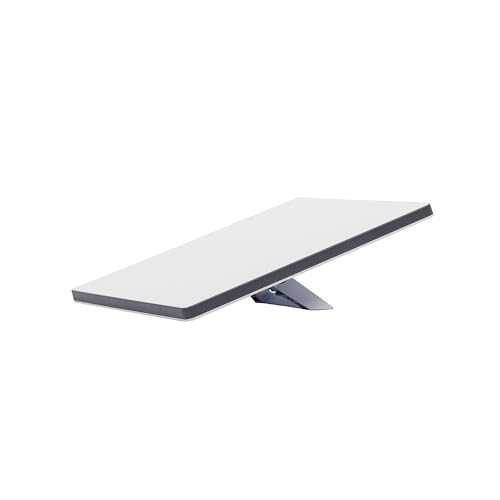
Starlink Mini Kit
Portable Satellite Internet Dish
A compact satellite dish with a built-in dual-band AC Wi-Fi router in a single backpack-portable unit.
A compact satellite dish with a built-in dual-band AC Wi-Fi router in a single backpack-portable unit. Starlink rates it for downstream speeds of over 100 Mbps, and its DC power input is designed for low power consumption and battery use. Requires an active Starlink service plan, sold separately by Starlink.
What We Like
❝Owners consistently call the setup fast and app-guided, and many say real-world speeds feel close to what they get from home internet.❞
STARGEAR USB-C to DC Cable 140W - Power Bank Adapter

STARGEAR Starlink Mini USB-C to DC Cable (140W)
STARGEAR USB C to DC Cable 140W Power Bank Adapter
A 6.
A 6.5-foot 18AWG USB-C to DC barrel cable with a smart protocol chip supporting 28V PPS and 20V PD, rated up to 140W. It needs a PD source of at least 100W and is not a voltage converter, so it will not run off plain 12V/24V battery systems without PD. The waterproof gasket design keeps the Starlink Mini at IP67 with the DC plug installed.
What We Like
❝Buyers like that it lets them ditch the AC adapter and run the dish straight from a USB-C power station, and the snug waterproof plug fit earns repeated praise.❞
STARGEAR 3-in-1 Power Cable - Car, Solar and USB-C Input

STARGEAR 3-in-1 Starlink Mini Power Cable (10ft)
STARGEAR 3 in 1 Power Cable Car Solar and USB C Input
One 10-foot 18AWG cable that combines a USB-C PD input up to 140W, a 12-24V cigarette-lighter input, and a 12-30V DC-to-DC input.
One 10-foot 18AWG cable that combines a USB-C PD input up to 140W, a 12-24V cigarette-lighter input, and a 12-30V DC-to-DC input. A built-in digital voltage display and on/off switch let you reboot the dish without unplugging anything. Works with car and RV sockets, solar setups, and off-grid battery systems, and includes a waterproof storage pouch.
What We Like
❝Van-lifers and RV owners describe it as the one cable that covers every power source they carry, with the inline switch making dish reboots painless.❞
MEKEET Hard Case - Waterproof Travel Protection

MEKEET Starlink Mini Hard Case
MEKEET Hard Case Waterproof Travel Protection
A waterproof, dustproof ABS hard shell with a precision-cut EVA foam interior that fits the Mini dish, kickstand, power adapter, pipe adapter, and cables.
A waterproof, dustproof ABS hard shell with a precision-cut EVA foam interior that fits the Mini dish, kickstand, power adapter, pipe adapter, and cables. Carries by shoulder strap or handle and includes a pressure equalization valve. Built for RV travel, camping, and hiking.
What We Like
❝Reviewers highlight the snug foam cutouts that hold every accessory in place and a rugged shell they trust in a truck bed or a checked-bag pile.❞
Starlink Standard Kit Gen 3 - Full-Size Home Dish
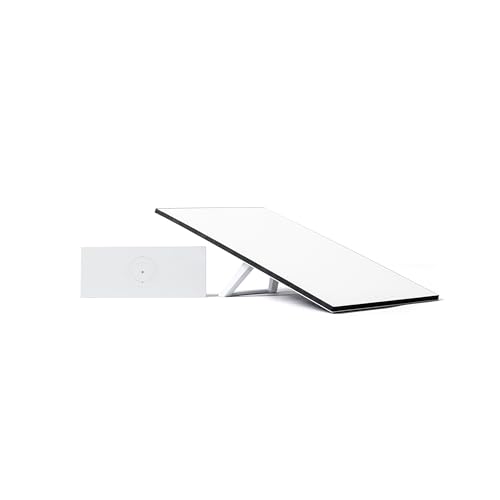
Starlink Standard Kit (Gen 3)
Starlink Standard Kit Gen 3 Full Size Home Dish
The full-size V4 dish with a separate Gen 3 tri-band Wi-Fi router, offering higher throughput and coverage than the Mini — but it is AC-powered and not backpack-portable.
The full-size V4 dish with a separate Gen 3 tri-band Wi-Fi router, offering higher throughput and coverage than the Mini — but it is AC-powered and not backpack-portable. Setup is two steps: plug it in and point it at the sky, with kickstand, router, cables, and power supply included. Requires a Starlink service plan on a household or travel tier.
What We Like
❝Owners in rural areas praise how simple the plug-and-point setup is and how consistently it carries streaming and work calls where no other provider reaches.❞
Review of Our Favorite 3
Portable Satellite Internet Dish
A compact satellite dish with a built-in dual-band AC Wi-Fi router in a single backpack-portable unit.
STARGEAR 3 in 1 Power Cable Car Solar and USB C Input
One 10-foot 18AWG cable that combines a USB-C PD input up to 140W, a 12-24V cigarette-lighter input, and a 12-30V DC-to-DC input.
About the Author