Buenos Aires Digital Nomad Guide: South America's Cultural Capital
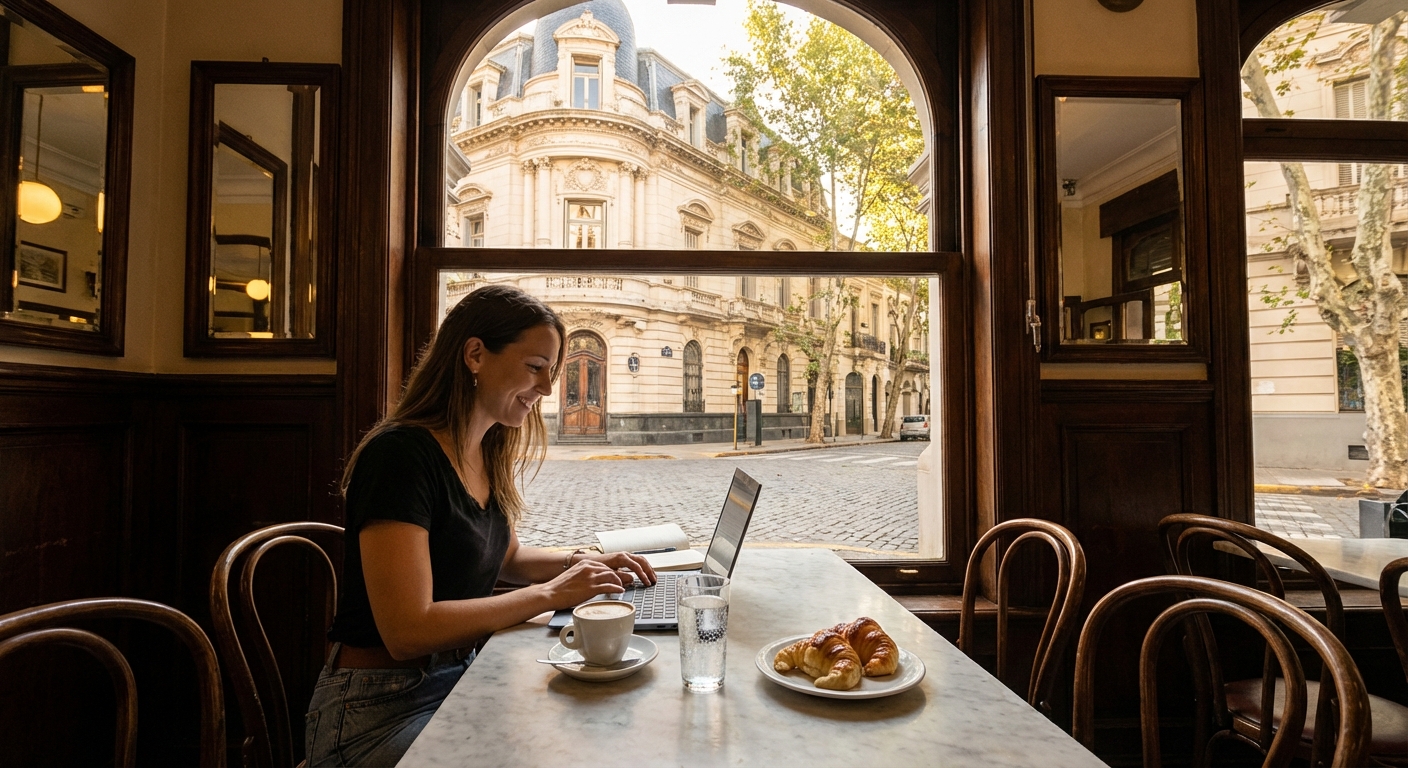

Buenos Aires delivers the most European experience in the Americas—belle époque architecture, cafe culture that rivals Paris, world-class steak and wine, and a cultural depth that few cities match. For digital nomads with USD income, Argentina's economic situation creates extraordinary value: a lifestyle that would cost $4,000+ monthly in European capitals runs $1,200-1,800 in Buenos Aires.
The city pulses with creative energy. Tango in the streets, bookstores that stay open until midnight, neighborhoods with distinct personalities, and a population that takes art, music, and conversation seriously. Buenos Aires isn't just a place to work remotely—it's a city that rewards curiosity and engagement.
The economic reality deserves honest acknowledgment: Argentina's inflation and currency instability create both opportunity (value for dollar-earners) and complexity (exchange rate navigation). Those willing to understand the system find exceptional value; those expecting simplicity may find frustration. This guide covers both the appeal and the practical realities.
Buenos Aires at a Glance
In this guide:
- Why Buenos Aires for Digital Nomads
- Cost of Living and Currency Reality
- Best Neighborhoods
- Coworking Spaces
- Internet and Connectivity
- Visa and Legal Considerations
- Culture and Lifestyle
- Practical Considerations
- When to Visit
For the complete global overview, see our best digital nomad destinations 2026 guide.
Why Buenos Aires for Digital Nomads
Buenos Aires offers a combination unavailable elsewhere in the Americas.
European Atmosphere, Latin American Prices
Buenos Aires was built to rival Paris—and in architecture, cafe culture, and cosmopolitan attitude, it largely succeeded. The city feels European in ways that Medellín or Mexico City don't, offering a cultural register familiar to those from Western backgrounds.
Yet you're paying Latin American prices. The arbitrage between what you'd spend in an actual European capital versus Buenos Aires is dramatic—often 50-70% savings for a comparable lifestyle.
Cultural Depth
This is a city that takes culture seriously. The bookstore density rivals any city globally. Tango isn't a tourist show—it's a living tradition with milongas (tango dance halls) throughout the city. Theater, live music, and art flourish. Porteños (Buenos Aires residents) engage in lengthy conversations over coffee as a matter of course.
For nomads seeking intellectual and cultural stimulation alongside remote work, Buenos Aires delivers at a level few destinations match.
Timezone Advantage
Buenos Aires operates on Argentina Time (UTC-3), which aligns reasonably with US East Coast hours. When New York is at 9am, Buenos Aires is at 11am. This creates workable overlap for US-based clients without requiring dramatic schedule shifts.
The timezone also enables European collaboration during Buenos Aires afternoons—more flexibility than Asian destinations offer for Western client work.
The Food and Wine
Argentine beef is legendary for reason. Asados (barbecues) are cultural institutions. Wine from Mendoza rivals international vineyards at fraction of the price. The Italian immigration influence created excellent pasta and pizza traditions. Cafe culture includes medialunas (croissants) and cortados that satisfy anyone's standards.
Cost of Living and Currency Reality
Buenos Aires' cost situation requires understanding Argentina's economic complexity.
The Currency Situation
Currency Complexity
Argentina has multiple exchange rates due to ongoing economic instability. The difference between official and "blue" rates can be 20-40%. Understanding this system is essential—using only credit cards means paying 30-40% premiums. Bring USD cash or use Western Union for the best rates.
Argentina has experienced chronic inflation and currency instability. Multiple exchange rates exist:
- Official rate: What banks and credit cards use
- Blue dollar (informal rate): Typically 20-40% higher, accessed through informal exchanges
- MEP/CCL (financial rates): Legal parallel rates through financial instruments
For dollar-earners, accessing the blue rate (through Western Union, informal exchanges, or crypto) dramatically improves purchasing power. This is widely practiced and essential for getting true value.
Cost Breakdown (Blue Rate Equivalent)
| Category | Budget | Average | Comfortable |
|---|---|---|---|
| Accommodation | $400-550 | $600-800 | $900-1,400 |
| Food | $200-300 | $350-450 | $500-700 |
| Coworking | $50-80 | $100-150 | $150-200 |
| Transport | $30-50 | $50-80 | $100-150 |
| Entertainment | $100-150 | $150-250 | $300-500 |
| Utilities/Phone | $30-50 | $50-70 | $70-100 |
| Monthly Total | $810-1,180 | $1,300-1,800 | $2,020-3,050 |
Practical Currency Tips
Bring USD cash: The most straightforward way to access favorable rates. Western Union transfers also work well.
Avoid credit cards for local purchases: Card transactions use the unfavorable official rate. Use cards only when necessary.
Crypto options: Some nomads use crypto exchanges (Binance P2P, local platforms) for currency conversion.
Plan ahead: Have a system before arriving. Running out of local currency with only credit cards available means paying 30-40% premiums.
Best Neighborhoods
Buenos Aires' barrios (neighborhoods) have distinct personalities. Here's where nomads typically land:
Palermo
Palermo is the default choice—and for good reason. The neighborhood combines excellent restaurants, cafe culture, coworking options, and international community in the most livable package Buenos Aires offers.
Sub-neighborhoods:
- Palermo Soho: Boutiques, restaurants, most international feel
- Palermo Hollywood: More local, good dining, slightly better value
- Palermo Viejo: Beautiful streets, quieter, residential feel
Pros
- Best restaurant and cafe density
- Strong international community
- Excellent coworking options
- Safe and walkable
- Parks and green space
Cons
- Highest prices in the city
- Can feel touristy in parts
- Nightlife noise in some areas
Budget: $600-1,000/month for a furnished one-bedroom
Recoleta
Adjacent to Palermo, Recoleta offers a more elegant, European atmosphere. The neighborhood attracts those seeking sophistication and proximity to museums, parks, and traditional Buenos Aires culture.
Pros:
- Beautiful architecture
- Near major museums
- Elegant atmosphere
- Safe neighborhood
- Good cafes
Cons:
- Less nightlife
- Fewer coworking options
- Older demographic
- Can feel formal
Budget: $550-900/month for furnished housing
San Telmo
The historic bohemian neighborhood offers cobblestone streets, antique markets, tango culture, and lower prices than Palermo. Better value and more character, though some areas feel grittier.
Pros:
- Historic character
- Sunday antique market
- Tango culture center
- Better value than Palermo
- Artist and bohemian community
Cons:
- Some streets feel less safe
- Fewer modern amenities
- Limited coworking
- Older apartment stock
Budget: $450-750/month for furnished housing
Villa Crespo
Adjacent to Palermo, Villa Crespo offers similar accessibility with better value. The neighborhood has gentrified significantly while maintaining more local character.
Pros:
- Better value than Palermo
- Growing restaurant scene
- More local atmosphere
- Close to Palermo amenities
- Emerging creative community
Cons:
- Less polished than Palermo
- Fewer international options
- Some areas still developing
Budget: $500-800/month for furnished housing
Coworking Spaces
Buenos Aires has developed solid coworking infrastructure.
Urban Station
Multiple locations, professional atmosphere, good internet. The established coworking option in Buenos Aires. Monthly hot desk around $80-120.
Best for: Professional environment, reliable infrastructure
Area Tres
Creative-focused coworking in Palermo. Good community, events, and networking opportunities. Monthly from $70-100.
Best for: Creative workers, community connection
WeWork
Standard WeWork experience with several locations. Higher prices ($150-200 monthly) but predictable quality.
Best for: Corporate atmosphere, meeting spaces
Cafe Culture
Buenos Aires cafe culture naturally supports laptop work. The city's tradition of lingering over coffee means cafes expect extended visits. Good options include:
- LAB Tostadores (Multiple locations) - Specialty coffee, work-friendly
- Cuervo Cafe (Palermo) - Reliable WiFi, good space
- Full City Coffee House (Palermo) - Popular with nomads
- Traditional cafes (various) - Historic atmosphere, variable WiFi
Cafes are generally tolerant of laptop work. The culture expects long visits; buy regularly but don't feel rushed.
Internet and Connectivity
Argentine internet is adequate but not exceptional.
Home Internet
Fibertel, Claro, and Movistar provide home internet. Fiber connections offering 50-100 Mbps are available in central neighborhoods. Service reliability varies; older buildings may have slower options.
Typical speeds: 30-100 Mbps down, 10-30 Mbps up in good apartments
Mobile Data
Personal (Movistar), Claro, and Tuenti offer prepaid options. Data plans run $15-25 monthly for 10-20GB. LTE coverage is good in central Buenos Aires.
For connectivity preparation, see our WiFi and connectivity guide.
Reliability
Infrastructure is generally reliable but not flawless. Power outages occur occasionally, particularly in summer heat. Having mobile data as backup and knowing coworking options provides insurance for important calls.
Visa and Legal Considerations
Argentina offers straightforward visa access for most nationalities.
Tourist Entry
Citizens of the US, Canada, EU, UK, Australia, and many other countries receive 90 days on arrival. Extensions of 90 days are possible through Migraciones (immigration office).
US citizens note: A reciprocity fee previously required was eliminated in 2016. Entry is now free.
Official source: Dirección Nacional de Migraciones
Longer Stays
For stays beyond 180 days:
- Border runs: Exit to Uruguay (Colonia or Montevideo) and return for a new 90-day stamp. Ferry trips are easy and affordable.
- Rentista visa: For those with regular passive income, provides longer-term legal stay.
Legal Considerations
Working remotely for foreign clients on a tourist visa exists in the typical gray area. Argentina doesn't enforce against digital nomads working for overseas employers. Don't work for Argentine clients or mention work at immigration.
Culture and Lifestyle
Buenos Aires rewards cultural engagement more than most destinations.
Tango
Tango isn't a tourist attraction—it's a living culture. Milongas (tango dance halls) operate nightly throughout the city. Taking lessons and attending milongas offers genuine cultural immersion unavailable elsewhere.
Cafe Culture
Porteños take coffee seriously. Sitting in a cafe for hours reading, writing, or talking is culturally normal—not just tolerated. This aligns perfectly with nomad work patterns.
Nightlife
Buenos Aires operates on late schedules. Dinner reservations start at 9-10pm. Bars fill up after midnight. Clubs open around 2am and run until dawn. The energy peaks on weekends, but midweek also has options.
Intellectual Culture
Bookstores stay open until midnight. Political discussion is common and expected. Art, literature, and ideas are taken seriously in ways that feel European rather than typically American.
Social Dynamics
Porteños are friendly but friendships develop slowly. The dating culture is complex—direct approaches are less common than in some Latin American countries. Spanish proficiency significantly improves social access.
Practical Considerations
Language
Spanish is essential for daily life. English proficiency exists in tourist areas but is less common than in European capitals. Basic Spanish enables much better experiences; conversational Spanish opens significant doors.
Argentine Spanish has distinct characteristics (voseo, Italian-influenced accent) but is mutually intelligible with other Spanish variants.
Safety
Buenos Aires is generally safe by South American standards but requires awareness:
- Street crime (phone snatching, pickpocketing) exists
- Some neighborhoods require more caution
- Express kidnappings (taxi-related) have occurred (use ride apps)
- Keep valuables concealed
- Be aware in crowded areas
Healthcare
Private healthcare in Buenos Aires is good and affordable. Swiss Medical, OSDE, and other private providers offer quality care. Public hospitals exist for emergencies. Travel insurance remains essential.
Weather
Buenos Aires has four seasons (Southern Hemisphere reversed):
- Summer (December-February): Hot and humid, 80-95°F (27-35°C)
- Fall (March-May): Pleasant, 60-75°F (15-24°C)
- Winter (June-August): Cool, 45-60°F (7-15°C)
- Spring (September-November): Pleasant, 60-75°F (15-24°C)
When to Visit
Best Times
March-May (Fall) and September-November (Spring) offer ideal weather—pleasant temperatures, lower humidity, beautiful city atmosphere.
Summer Considerations
December-February brings heat and humidity. Many Porteños leave the city in January for beach vacations. Some businesses close or reduce hours. However, lower tourist numbers and potential housing deals exist.
Winter Considerations
June-August is cool but manageable. The city functions normally. Indoor heating varies in older buildings—verify apartment heating before renting.
Events
- Easter week: City empties as locals travel
- July winter break: School holidays, some increased activity
- December-January: Summer exodus to beaches
Your Next Steps
Buenos Aires offers European cultural depth at Latin American prices for those willing to navigate the economic complexity. The city rewards extended stays and genuine cultural engagement.
If you're considering Buenos Aires:
-
Understand the currency system - Have a plan for accessing blue dollar rates before arrival. Bring USD cash initially.
-
Start with Palermo - Best combination of amenities, safety, and international community for newcomers.
-
Learn Spanish - More important here than in some Latin American destinations. The culture rewards those who engage in the local language.
-
Plan for longer stays - Buenos Aires reveals itself over months, not weeks. Short visits miss the depth.
-
Embrace the schedule - Late dinners, later nightlife. Adapt to local rhythms rather than fighting them.
For related Latin American options, see our Medellín digital nomad guide and Mexico City digital nomad guide.
For the complete global overview, return to our best digital nomad destinations 2026 guide.
About the Author